


My Journey - Puzzles & Stories
4.8304.00 Reviews
App Specs
- Version
- 1.35.0819
- Updated On
- License
- Free
- Downloads
- 50,000+
- Developer
- ZenLife Games Ltd
- Categories
- Casual
- Platform
- Android
Screenshots

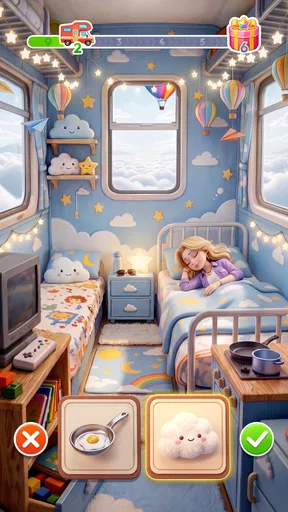



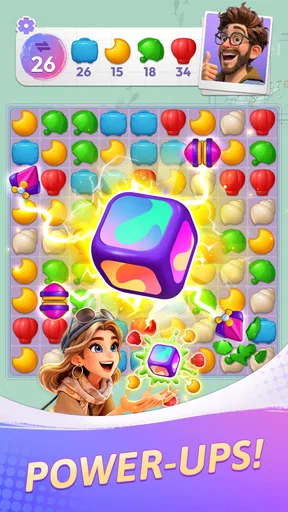

 Analysis by AppCompare
I spent my time with My Journey - Puzzles & Stories looking at one central idea: how well it combines match-3 play with a mystery that moves Olivia forward. That combination sounds familiar, but the important question is whether the story gives the puzzles a reason to matter, or whether it simply sits beside them as decoration. In my experience, this game is most appealing when I want a relaxed puzzle session with a continuing narrative thread rather than a purely competitive challenge.
It is a free casual game from ZenLife Games Ltd, aimed at players who enjoy familiar tile-matching rules but still want a little curiosity between boards. Its store summary presents the journey as a mystery involving Olivia, and that focus shapes the way I approached each short session. I was not only trying to clear pieces; I also had a reason to continue and see what came next.
The game has an average rating of 4.9 from around 1.8 thousand ratings, with over 50 thousand installs. Those figures suggest that its gentle blend of puzzles and storytelling has found an audience, although popularity alone does not make it ideal for every player. If you want intense competition, deep strategy, or a game built around fast reflexes, this is probably not where I would start.
Why the story changes the way the puzzles feel
I find the story changes the feel of each board by giving a solved puzzle a place in Olivia’s larger journey, rather than leaving it as a stand-alone win. That context can make a patient, careful approach more satisfying, especially when I’m playing in a short break. It also sets up the next question: how clearly does the game make progress feel worthwhile?
A match-3 game with a reason to keep going
The strongest capability here is the connection between solving boards and uncovering Olivia’s mystery. In a standard casual match-3 game, the next level can feel like an isolated task. Here, the journey gives the individual puzzles a little more context. Even when the basic action remains familiar, I found myself treating a completed board as progress through a larger situation rather than just another score screen.
That difference matters most during short play sessions. I can open the game when I have only a few quiet minutes, solve a puzzle, and feel that I have advanced the story as well as cleared a board. It is a small but useful psychological advantage over endless puzzle games, where progress can become difficult to remember once the immediate excitement fades.
The story focus also makes the game easier to recommend to people who normally lose interest in match-3 titles. Someone who enjoys light mysteries may be more willing to continue through a difficult board if the narrative gives that effort a purpose. I would not describe it as a replacement for a dedicated adventure game, though. The puzzle remains the main activity, and the story works as the motivation around it.
Worth Reading Before You Choose

Baby Panda World Brings Quick Play to Modern Phones, but Its Game Library Feels Busy

ESPN’s Live Game View Makes Following Close Games Easier

QuizzLand Review: A Good Fit for Short Trivia Breaks, Not Every Player

Basketball Stars: Multiplayer Is Fast, but Can It Recover When Matches Go Wrong?

WEBTOON Turns Phone Updates Into a Better Reading Routine

Link to Windows Runs on Shared Habits, Not Social Feeds
What this means during ordinary play
In practice, I approached the game differently from a score-focused puzzler. Instead of rushing through every move, I paid more attention to the board as a small problem connected to Olivia’s progress. That encouraged a calmer rhythm. I looked for useful matches first, considered whether a move would open more space, and avoided treating every available combination as equally valuable.
This is one of the less obvious strengths of the story-and-puzzle format: it can make patience feel worthwhile. A player who normally makes quick moves just to see the next animation may begin thinking one step further because completing the level is tied to a continuing journey. That does not turn the game into a complex strategy title, but it gives the familiar format a more personal sense of direction.
There is also a trade-off. If the mystery does not hold your attention, the main reason to continue becomes the match-3 system itself. Players who already feel tired of matching tiles may find that a narrative wrapper is not enough to keep the experience fresh. For me, the story makes the format more inviting, but it cannot completely hide the repetition that comes with any game built around repeated puzzle boards.
How I would use it in a normal day
A realistic use case is an evening when I want something entertaining but not demanding. I might play while taking a break from work, during a commute with enough battery and connectivity for my usual mobile routine, or before bed when a competitive game would feel too intense. The mystery gives me a clear stopping point: I can finish a board, absorb the next piece of the journey, and put the phone down without feeling that I have abandoned a long multiplayer match.
That makes the game particularly suitable for players who prefer flexible sessions. I do not need to reserve a large block of time for it, and I can return later with a clear sense of what I was doing. The casual category is a good fit here, not because the game has no challenge, but because its central appeal is accessible progress rather than pressure from other players.
My practical tip is to avoid opening it with the expectation of a quick burst of competitive excitement. I get more from it when I treat each session as a small chapter: solve carefully, follow Olivia’s journey, and stop when the session naturally feels complete. That mindset matches the game far better than trying to force a high-intensity arcade experience out of it.
Where it sits beside familiar alternatives
Compared with a traditional match-3 game that concentrates mainly on levels, boosters, or score goals, this title gives more weight to the reason behind the next puzzle. Compared with a story-heavy adventure game, it asks much less from the player mechanically and keeps the interaction simple. I see it occupying the middle ground between those two styles.
That middle ground is useful, but it also defines the audience. If your favorite puzzle games are all about optimizing every move and chasing the best possible result, a story-led structure may feel like a distraction. If you want characters, dialogue, and exploration to dominate, the match-3 boards may feel too prominent. The better alternative depends on which side of that balance you actually enjoy.
For a friend who says, “I like matching games, but I need some reason to care about the next level,” I would recommend giving this one a try. For someone who says, “I want a deep mystery first and a puzzle second,” I would point them toward a more dedicated narrative game instead. My Journey works because it keeps both elements visible, not because it completely transforms either one.
Small habits that improve the experience
One useful habit is to slow down before making the first obvious match. In a game built around connected progress, finishing a board matters more than making a flashy move immediately. I found it better to scan for matches that create room or improve the next few options, especially when the board starts to become less open.
Another practical approach is to play in focused sessions rather than constantly checking the game for a few seconds at a time. A short, uninterrupted session makes the story easier to follow and helps me remember why the current puzzle matters. This is especially helpful when I have not played for a while and need to reconnect with Olivia’s situation.
I would also keep spending decisions separate from the emotional pull of the mystery. The game is free to play, but optional purchases range from $1.99 to $99.99 per item. That wide range is important context for anyone who is easily tempted to pay when a board slows progress. I recommend deciding in advance whether you are comfortable spending at all, rather than making that choice while trying to reach the next story moment.
The main trade-offs I noticed
The free entry point is convenient, especially for casual players who want to test the story before committing. At the same time, the presence of in-app purchases means the experience deserves a little self-control. A player who wants a completely purchase-free environment may prefer a paid puzzle game with a simpler cost structure, even if it offers less ongoing content.
The Teen content rating is another point parents and younger players should consider. It is not a reason to dismiss the game automatically, but it does mean I would not treat it as a universal children’s title without checking whether its tone suits the intended player. For teenagers and adults looking for a light mystery, the rating is less of a concern; for younger children, I would choose more carefully.
Device compatibility is reasonably approachable for older Android hardware because the minimum requirement is Android 6.0. Still, meeting a minimum operating-system requirement does not guarantee that every device will feel equally comfortable. Screen size, available storage, battery condition, and general performance can affect how pleasant any mobile game is to use. I would install it on the intended phone rather than assuming an older device will provide the same experience as a newer one.
The current version is 1.35.0819, and the game was released on April 15, 2026. Those details matter when checking whether a review matches the version available on your device. Mobile games can change their balance and presentation over time, so I would pay attention to the version shown in the store before comparing my experience with older comments.
Who gets the most from Olivia’s journey
I think the best audience is someone who wants a low-pressure puzzle game with a continuing objective. That includes players who enjoy match-3 mechanics but need a narrative hook to avoid boredom, people who prefer solo mobile games, and anyone who likes dividing entertainment into short, manageable sessions.
It can also work well for a player who is returning to casual games after a break. The basic interaction is approachable, while the mystery provides enough direction to make the return feel more meaningful than opening a random level generator. I would especially suggest it to a friend who likes light storytelling but does not want to learn a complicated control system or manage a large world.
I would skip it if my priority were serious competitive play, elaborate character development, or a completely predictable cost-free experience. I would also be cautious if I knew I was likely to spend impulsively whenever progress became difficult. The free download makes experimentation easy, but the purchase range means the game is best enjoyed with a clear personal limit.
My final recommendation
My Journey - Puzzles & Stories is at its best when the mystery gives ordinary match-3 solving a sense of purpose. I like that I can play in short sessions and still feel connected to Olivia’s progress, rather than simply clearing disconnected boards. The game does not need to reinvent the puzzle format to be worthwhile; its value comes from how the story changes my reason for continuing.
ZenLife Games Ltd has aimed this casual game at players who want something gentler than a competitive title but more engaging than a sequence of unrelated puzzles. The free price makes it easy to explore, while the Teen rating and in-app purchase range are worth keeping in mind before settling in. I would recommend it to story-curious puzzle fans, with the honest warning that players seeking deep strategy or a purely purchase-free experience may be happier elsewhere.
My bottom line: choose this game when the journey matters as much as the match. If that balance sounds appealing, it is a thoughtful way to fill short breaks and unwind. If the mystery is not enough to make repeated matching enjoyable, its central strength will not fully solve that problem.
Pros
- Relaxing puzzle gameplay suited to short sessions
- Story chapters give progress a clear sense of purpose
- Simple controls are easy for new players to understand
- Visual style creates a calm and pleasant atmosphere
- Works well for players who prefer thoughtful challenges
Cons
- Some puzzles may feel repetitive after extended play
- Difficulty can vary noticeably between different stages
- Progress may be slowed by limited hints or resources
- Story pacing may feel slow for players seeking action
- Some content or features may require in-app purchases
FAQs for My Journey - Puzzles & Stories
What is My Journey - Puzzles & Stories?
My Journey - Puzzles & Stories is a mobile puzzle game that combines match-style challenges with a narrative adventure. As you complete levels, you help the main character progress through different locations, unlock story moments, and improve or restore parts of the surrounding world. The game is designed for casual play, with short stages that are suitable for quick sessions on Android and iOS devices.
How does the gameplay work in My Journey - Puzzles & Stories?
The core gameplay involves solving colorful puzzle boards by matching or combining similar pieces, usually to complete specific objectives within a limited number of moves. Successful levels may reward coins, boosters, or other resources that help you advance the story. Difficulty gradually increases, so later stages can require more planning rather than simply making quick matches.
Is My Journey - Puzzles & Stories free to download and play?
The game can generally be downloaded and played without an upfront purchase, but it may include optional in-app purchases. These purchases can provide extra lives, boosters, coins, or faster progress. Players who prefer not to spend money should still be able to play, although waiting for lives to refill or repeating difficult levels may be part of the free experience.
Does My Journey - Puzzles & Stories require an internet connection?
An internet connection may be needed for the initial download, account-related features, advertisements, cloud synchronization, updates, and in-app purchases. Some puzzle levels may work temporarily without a connection, but offline availability can vary depending on the version and device. For the most reliable experience, it is best to launch the game online and keep it updated.
Are there advertisements or age restrictions in the game?
My Journey - Puzzles & Stories may display advertisements, particularly when players choose optional rewards or between gameplay sessions. The exact advertising experience can depend on the platform, region, and current version. Because the game combines puzzles with story content and possible purchases, parents should review the store rating and device purchase controls before allowing younger players to download it.


